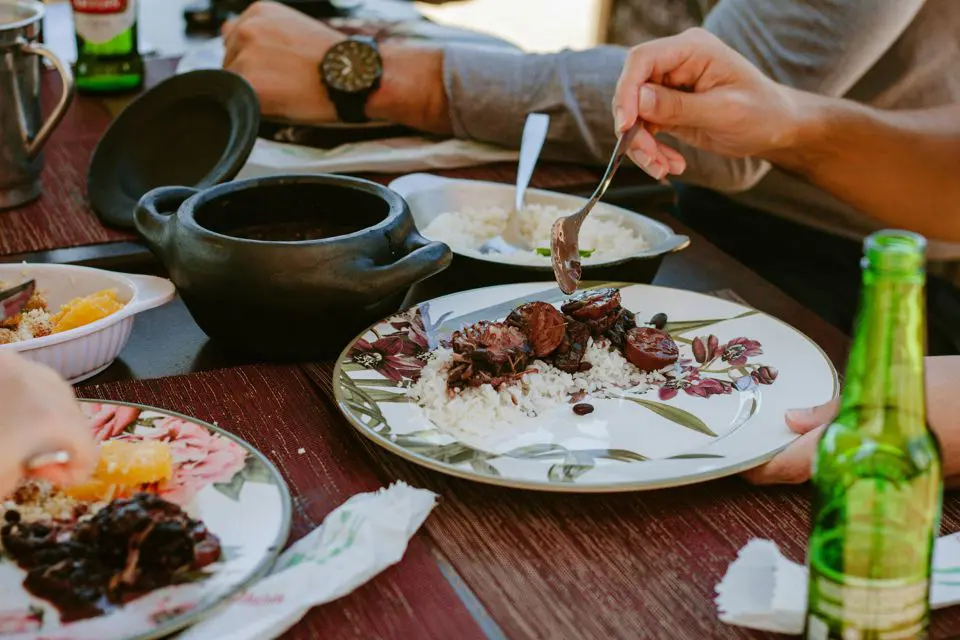
To take a tour of Rio de Janeiro that includes stops at food stalls and restaurants serving typical dishes of Carioca gastronomy, you need nothing more than a good walk and letting yourself be carried away by the colors and aromas emanating from the kitchens. In this iconic city of Brazil, you eat very varied and delicious food, so get ready to delight yourself in a world of flavors.
Rio's traditional dishes are full of history and contemporary proposals reinterpreting local cuisine. Brazil's typical food combines Indigenous, African, and Portuguese influences. A lot of protein, vegetables, and fruits are eaten, but also many fried preparations enhancing the flavor of each food. You will find everything from street dishes like pão de queijo and açaí to more elaborate meals like feijoada or moqueca, representing the richness of tropical ingredients and culinary techniques of the country.
In this guide, you will find what to eat, where to try typical foods, and a clear idea of how much it costs to eat in Rio de Janeiro to put together your own culinary itinerary. In addition, taking a food tour in Rio de Janeiro means including iconic drinks like caipirinha, natural tropical fruit juices, and local cocktails accompanying every gastronomic experience.
Where and What to Eat in Rio de Janeiro
A good place to start is the Rio de Janeiro promenade (orla), especially in the Copacabana area. There, especially in the central sector where the famous Copacabana Palace Hotel is located, you will find beach stalls and carts of all kinds. The latter will be the cheapest (any option is around 15 to 30 reais) and offer foods that are 100 percent typical: queijo assado (grilled cheese) with honey and oregano, chicken and bacon skewers or garlic shrimp, milho (corn), pão de queijo (cheese bread), açaí with granola and fruits, pastel de feira with cane juice, coxinha, and much more.
Also, you will find typical carts offering drinks like caipirinha or caipivodka, and juices and smoothies of very varied natural fruits. In the roofed beach stalls (quiosques) with chairs and tables, besides offering these options, you can find the classic feijoada, which includes rice, beans, chicken or fish, and salad. Another unmissable dish is moqueca, a shrimp stew that delights everyone.
In summary, at these stalls, you can find:
Confectioneries and Cafes in Rio de Janeiro
Rio covers much more than classic beachfront stalls. You can also take advantage of your stay to explore top-notch confectioneries and cafes, such as Confeitaria Colombo in the Santa Teresa-Centro neighborhood or the identical option at Forte Copacabana: both are famous for providing complete breakfast and snack options with fruits, coffee, juices, and typical sweets and pastries, such as pastel de Belém or pão de alho (garlic bread).
In the Ipanema area, an unavoidable classic is the Garota de Ipanema bar, where, according to legend, in the sixties Vinicius de Moraes composed the legendary song inspired by a beautiful woman who made him fall in love after seeing her pass in front of that cafe every afternoon.
Emblematic Restaurants of Rio de Janeiro
Beyond street stalls and cafes, Rio de Janeiro has unmissable restaurants and traditional taverns where you can taste traditional and modern dishes. The most iconic ones combine the best of local gastronomy with top-level live music and dance shows. Therefore, knowing them is a good option to cover more than one typical cultural experience of Rio de Janeiro.
Rio Scenarium: The Epicenter of Culture and Collecting in Lapa
Located in an old 19th-century warehouse in the heart of Lapa, Rio Scenarium is a restaurant, cultural pavilion, antique shop, and live music club. Its setting is its most distinctive feature: three floors connected by period elevators, decorated with more than ten thousand collection pieces, from antique furniture to toys and relics of Brazilian cinematography. This aesthetic integrates Rio's architectural history with current nightlife, which has consolidated the place as an international benchmark.
Regarding its gastronomic proposal, the menu leans towards traditional Brazilian cuisine. Bolinhos de bacalhau (cod fritters) and sliced picanha stand out as options to share. On Saturdays, the place is recognized for its complete feijoada, an essential dish of Carioca culture. The cocktail bar focuses on tropical fruit caipirinhas, prepared with high-quality cachaças.
The dynamics of the place allow choosing from a quiet dinner to dancing on the central dance floor, where Samba, Forró, and Chorinho orchestras perform, genres defining Brazil's sound identity. Its strategic location on Rua do Lavradio makes it the ideal starting or closing point for any tour of bohemian Lapa.
Roxy Dinner Show: Gastronomy and Art Deco in Copacabana
The historic Cine Roxy was inaugurated in 1938 but today functions as an entertainment center revitalizing the heart of Copacabana. It maintains its iconic Art Deco facade and operates as a high-level "Dinner Show", with a capacity for 700 spectators. By recovering a building that is city heritage, the Roxy positions itself as the new cultural pole of the South Zone, offering an alternative combining performing arts with technical and refined gastronomy.
The culinary proposal, designed by chef Danilo Parah, moves away from conventional tourist menus to highlight regional ingredients with modern techniques. The experience includes a three-course dinner proposing from fresh fish from the Brazilian coast to contemporary roasted meat options. The cocktail menu, with an author profile, accompanies the rhythm of the evening. The main show, titled "Aquele Abraço", is a production with great technological deployment traversing the country's regions through Samba, Frevo, and MPB.
Other Recommended Stops for a Food Tour in Rio de Janeiro
Adega Perola is a traditional boteco (bar-restaurant) with more than 60 years of history and an extensive bar of typical Brazilian and Portuguese petiscos (appetizers), such as octopus vinaigrette, sardines, and cod. Ideal for tasting local flavors accompanied by a cold beer or a caipirinha. We recommend trying the rice with broccoli.
There is also Combinado Carioca, where in addition to typical dishes they serve a delicious cashew fruit caipirinha (caipirinha de caju).
Meanwhile, Braseiro is a steakhouse-type restaurant with cuts of meat and typical starters, perfect for those wanting to explore the meats and intense flavors of Brazilian cuisine.
Boteco Princesa in the exclusive neighborhood of Leblon offers varieties of typical food and classic drinks, ideal for ending an afternoon stroll with style.
Chanchada in Botafogo and its combination of signature drinks and delicious dishes make it a weekend night classic.
And at Terra Brasilis, you find traditional Brazilian flavor with intense dishes and an excellent location next to Praia Vermelha (Urca), ideal for classic lunches after touring the city.
How Much Does it Cost to Eat in Rio de Janeiro
One of the most common questions when planning a trip to Brazil is how much it costs to eat. Based on local experiences, this is a price reference for food in Rio de Janeiro.
- Street food and carts: between 15 and 30 reais per dish or snack, depending on the type of stall and area.
- Casual restaurants or traditional botecos: generally you can share main dishes and drinks without spending more than 200 reais for two people, especially if sharing options and ordering simple drinks.
- In areas like Leblon and Ipanema, prices can be somewhat higher, both for food and drinks.
Published by Has Chacon on 08/06/2026